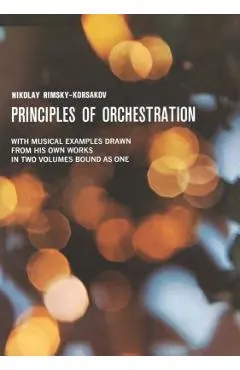
Principles of Orchestration - Nikolai Rimsky-korsakov
| Magazin | Preț | Ofertă |
|---|---|---|
| Magazin 1 | 148,55 lei | Vezi oferta |
Cel mai mic preț văzut de noi în ultimele 90 de zile: 148,55 lei. Cu 18,57 lei sub maximul de 167,12 lei.
🔔 Anunță-mă când scade prețul
Prețurile sunt actualizate zilnic, dar pot apărea diferențe din motive tehnice între prețul afișat aici și cel de la magazin. Prețul final, stocul exact, livrarea și returul le afli cu click pe butonul „Vezi oferta”.
Întreabă despre acest produs
Asistent AI care răspunde doar din datele din catalog. Comanda, livrarea și garanția sunt la magazinul ales.
Caracteristici
| Brand | Nikolai Rimsky Korsakov |
|---|---|
| Categorie | Artă, design și arhitectură |
Descriere
nTo orchestrate is to create, and this cannot be taught, wrote Nikolay Rimsky-Korsakov, the great Russian composer whose genius for brilliant, highly colored orchestration is unsurpassed. But invention, in all art, is closely allied to technique, and technique can be taught. This book, therefore, which differs from most other texts on the subject because of its tremendous wealth of musical examples and its systematic arrangement of material according to each constituent of the orchestra, will undoubtedly be of value to any music student.
It is a music classic, perhaps the only book on classical orchestration written by a major composer. nIn it, the composer aims to provide the reader with the fundamental principles of modern orchestration from the standpoint of brilliance and imagination, and he devotes considerable space to the study of tonal resonance and orchestral combination. In his course, he demonstrates such things as how to produce a good-sounding chord of certain tone-quality, uniformly distributed; how to detach a melody from its harmonic setting; correct progression of parts; and other similar problems.
nThe first chapter is a general review of orchestral groups, with an instrument-by-instrument breakdown and material on such technical questions as fingering, range, emission of sound, etc. There follows two chapters on melody and harmony in strings, winds, brasses, and combined groups. Chapter IV, Composition of the Orchestra, covers different ways of orchestrating the same music; effects that can be achieved with full tutti; tutti in winds, tutti pizzicato, soli in the strings, etc. chords; progressions; and so on. The last two chapters deal with opera and include discussion of solo and choral accompaniment, instruments on stage or in the wings, technical terms, soloists (range, register, vocalization, vowels, etc.), voices in combination, and choral singing.
nImmediately following this text are some 330 pages of musical examples drawn from Sheherazade, the Antar Symphony, Capriccio Espagnol, Sadko, Ivan the Terrible, Le Coq d'Or, Mlada, The Tsar's Bride, and others of Rimsky-Korsakov's works. These excerpts are all referred to in the text itself, where they illustrate, far better than words, particular points of theory and actual musical practice. They are largely responsible for making this book the very special (and very useful) publication it is.
nThis single-volume edition also includes a brief preface by th
Descrierea este cea a magazinului partener.
Alternative mai ieftine

Produse similare
Din aceeași categorie, cu denumire apropiată, de la mai multe magazine.



Categorii înrudite
Toate produsele din Artă, design și arhitectură (13.511 produse)
✨ Caută cu AI. Nu e ce cauți? Descrie exact ce vrei. Buget, pentru ce îl folosești — alegem produsele care se potrivesc cel mai bine.