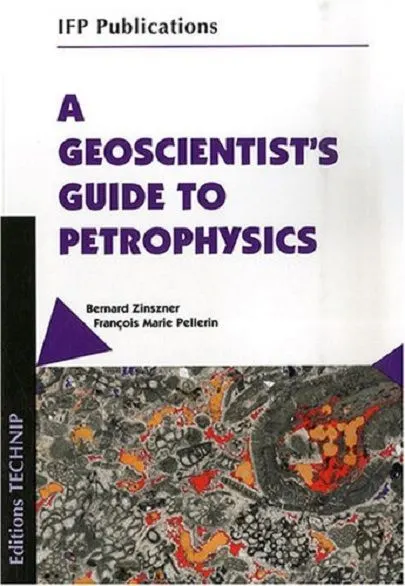
A Geoscientists Guide to Petrophysics | B Zinszner
| Magazin | Preț | Ofertă |
|---|---|---|
| Magazin 1 | 615 lei | Vezi oferta |
🔔 Anunță-mă când scade prețul
Prețurile sunt actualizate zilnic, dar pot apărea diferențe din motive tehnice între prețul afișat aici și cel de la magazin. Prețul final, stocul exact, livrarea și returul le afli cu click pe butonul „Vezi oferta”.
Întreabă despre acest produs
Asistent AI care răspunde doar din datele din catalog. Comanda, livrarea și garanția sunt la magazinul ales.
Caracteristici
| Brand | Editions Technips |
|---|---|
| Categorie | Carte în limbi străine |
Descriere
Geoscientists and Engineers taking an interest in Petrophysics, are struck by the contrasting treatment of the Physics Aspects and the Geology Aspects. In most publications, the Physics Aspect prevails. The rock itself is considered as a black-box whose microscopic structure is briefly described as a model sometimes remote from reality.
But if we are to scale up isolated petrophyscial observations to an entire oil reservoir or an aquifer, it is essential to implement the powerful extrapolation tool of geological interpretation. This is clearly based on a good understanding of the relations between the petrophysical parameters studied and the petrological characteristics of the rock considered. This Geological approach of Petrophysics is at the heart of our project.
The book is divided into two sections of different size: The first section (by far the largest) describes the various petrophysical properties of rocks. Each property is defined, limiting the mathematical formulation to the strict minimum but emphasising the geometrical and therefore petrological parameters governing this property. The description of the measurement methods is restricted to an overview of the principles required for good communication between the geoscientist and the laboratory petrophysicist.
For each property, we detail one or two aspects of the relations between petrophysics and geology (e.g. the porosity/permeability relations in carbonate rocks or irregular water tables and stratigraphic traps).The second section concentrates on methodological problems and concerns, above all, the representativeness of the measurements and the size effects. The notions of Representative Elementary Volume, Homogeneity, Anisotropy, Rock Type, etc. provide a better understanding of the problems of up-scaling (Plug, Core, Log Analysis, Well Test).
Lastly, we provide a description of several Porous
| Network investigation methods | Thin section, Pore Cast, Visualization of capillary properties, X-ray tomography. |
|---|---|
| Contents | 1. Petrophysical Properties and Relations with Petrology. Calculation of Fluid Volumes in Situ (Accumulations): Static Properties. Fluid Recovery and |
| Modelling | Dynamic Properties. Log and Geophysical Analysis. 2. Scale Changes and Characterization of Porous |
| Media | Methods and Techniques. Measurement Representativeness and Reservoir Characterization. Porous Network Observation Techniques. References. Porosity Terms Glossary-Index. Subject Index. Author Index |
Descrierea este cea a magazinului partener.
Produse similare
Din aceeași categorie, cu denumire apropiată, de la mai multe magazine.




Categorii înrudite
Toate produsele din Carte în limbi străine (28.862 de produse)
✨ Caută cu AI. Nu e ce cauți? Descrie exact ce vrei. Buget, pentru ce îl folosești — alegem produsele care se potrivesc cel mai bine.